Build apps on your business's ontology
Apps and agents that read a business's live data — orders, chat, campaigns, contacts — through one OAuth-scoped MCP endpoint. Host the UI on {app}.rexium.app, or install a ready-made example in one click. No servers to run.
Example apps
Real Surfaces running on rexium.app — read one, then install your own copy in one click.
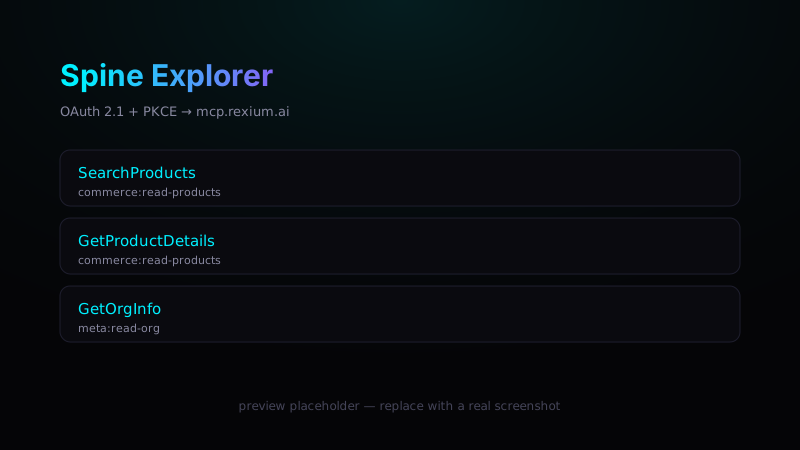
Sign in with OAuth 2.1 + PKCE, list the tools your scoped token can call, and invoke them against your Spine via mcp.rexium.ai. The scopes are the sandbox.
View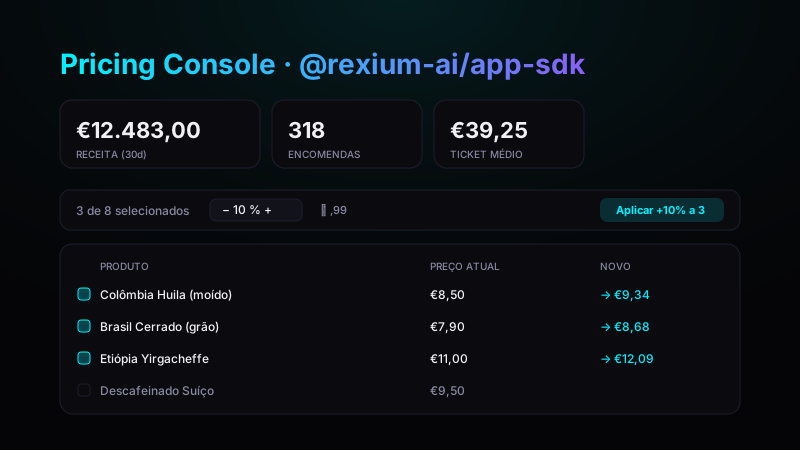
Built on @rexium-ai/app-sdk: typed reads + bulk repricing. Select products, apply a +/- % (with ,99 rounding) and a live preview, or adjust one at a time. The fastest way to start an app.
View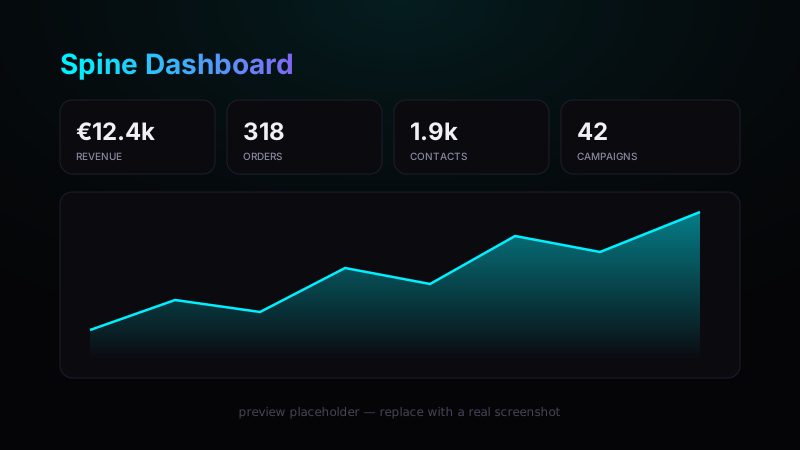
A cross-vertical analytics Surface: read-only aggregate tools (orders, contacts, campaigns) charted with Recharts. A proper build you can fork as a starting point.
View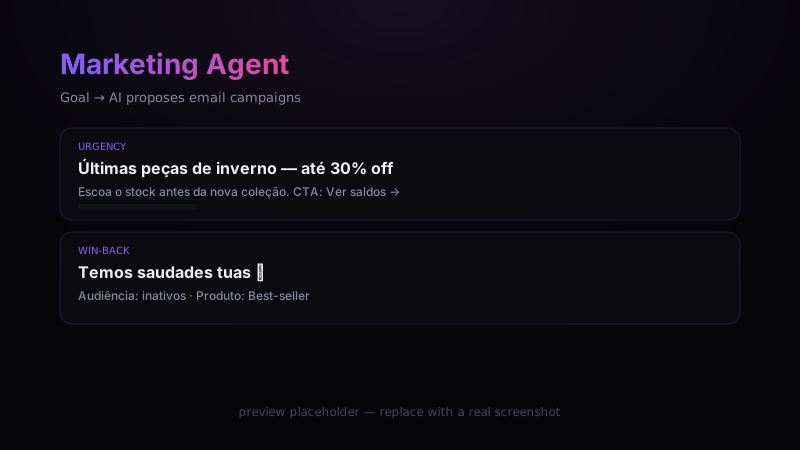
An AI agent that reads your catalog + audience segments and proposes email campaigns toward a goal. It proposes; you approve in Reach.
View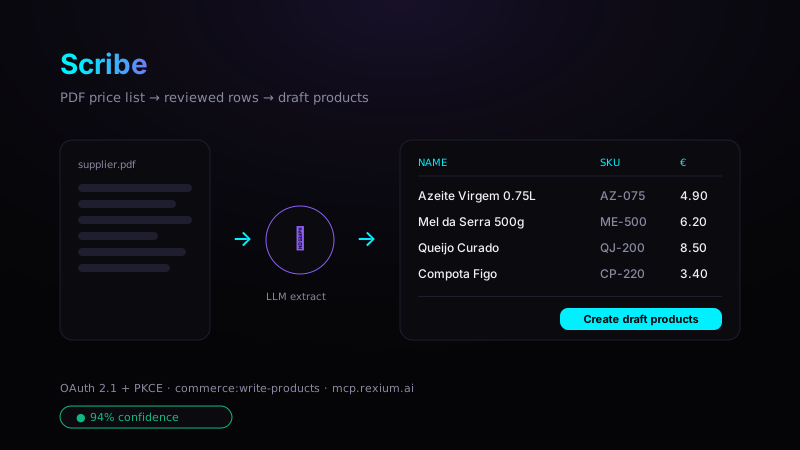
Drag & drop a supplier price list (PDF), preview it side-by-side, review the LLM-extracted rows, and create draft products. Document, extraction and products linked for lineage.
View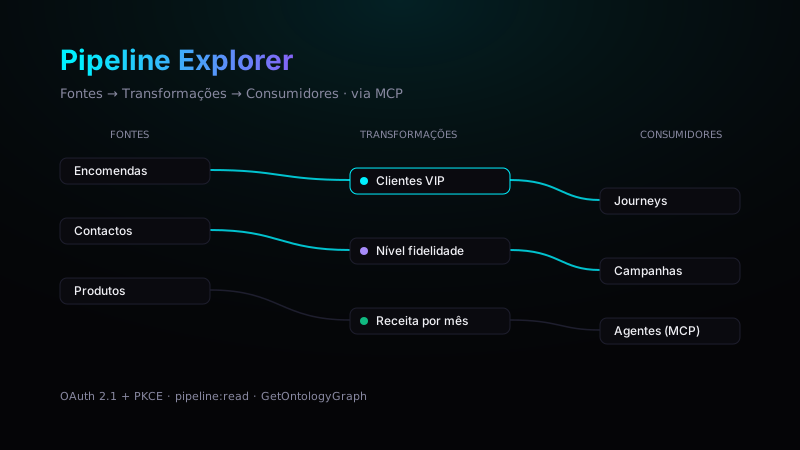
The Org's data as one connected graph: source entities → AI-authored transforms → consumers, read live over MCP. Hover a node to light its lineage.
ViewWhy build on Rexium
MCP + tools/search
Your agent discovers actions by intent, not by listing the entire catalog. tools/search ranks your available actions by relevance, gated by your OAuth scopes.
Agent-visible custom fields
Per-Org custom fields the merchant declared agent-visible appear inline in /feed.json, in get_product_details, everywhere. Shopify metafields can't do this.
OAuth 2.1 + PKCE + ES256
RFC 8414 metadata discovery, S256 mandatory PKCE, per-Org JWK keypairs for AP2 Cart Mandate signing. Compliance-grade out of the box.
Single-fetch discovery
.well-known/rexium-agent.json per storefront returns capabilities + tools + schemas + signing keys. Your agent walks one URL and knows everything.
Get started in 5 steps
- 1
Sign in
Any Rexium account works. Don't have one yet? (free.) - 2
Register your app
Go to the Developer Console. Name + redirect URI + the scopes you want. Browser Surfaces are public (PKCE) apps — no secret; server-side apps get a one-time client secret. - 3
Read the manifest
Fetch{store}/.well-known/rexium-agent.json. You get OAuth endpoints, the MCP server URL, the full scope catalog, schemas, and signing keys. - 4
Authorise a merchant
Send the merchant torexium.ai/oauth/authorizewith PKCE. They click "Allow." You exchange the code at the token endpoint for an access token. - 5
Call MCP
POST JSON-RPC to/mcpServer. Trytools/searchwith your intent — it returns the top-N actions ranked by relevance, filtered by your scopes.
Host it on rexium.app
Ship the UI too. Deploy your built dist/ to {app}.rexium.app from the console — static, edge-served, sandboxed (the OAuth scopes are the only thing it can touch). Or install an example in one click and fork it. No servers, no DevOps.
Example: VIP Tagger
~70-line Node.js agent that finds happy customers (5★ review authors in the last 30 days) and tags them as VIP via apply_contact_tags. Audit row in the merchant's /automation dashboard shows "via app vip-tagger" badge.
Dev tier limits
- · Hosted Surfaces per Org by plan: Starter 3 · Growth 10 · Pro 25 · Enterprise unlimited.
- · Up to 5 hand-registered apps per developer account.
- · Scopes available:
commerce:*,chat:*,reach:*,contacts:*,media:*,meta:read-org.billing:*requires superadmin review. - · Same rate limits as production tier.
- · No SLA; production review available on request.